Mold Remediation for Salt Lake City Homes
Request an estimate today
Mold remediation means finding the moisture, containing the affected area, removing the mold, and cleaning the air and surfaces. It is more than a spray and a scrub. Done wrong, spores spread to rooms that were clean before.
Specialahead Mold Help is a referral service. We do not inspect, test or remove mold. We take your request and route it to an independent provider in our network, who sets the scope and the price. Basements, wood framing and stucco walls each hold moisture in different ways, and a local provider knows what to look for. This page explains the process, the typical costs, and which small jobs you can safely help with.
Found mold? Do these four things first
Start with the water. Mold needs moisture, so shut off the leak or stop the source if you can.
Next, keep people out of the area, especially anyone with asthma, allergies or a weak immune system. Do not scrub, sand or blast it with a fan. That lifts spores into the air and carries them through the house.
Finally, take clear photos and note the date. You will want them for the provider and possibly for your insurer.
Who does what
Transparency matters here, so this is the full picture. We route, they remove. Specialahead Mold Help collects your request and passes it to a local provider in our network. That provider is independent. It sets its own schedule, scope and price.
Request a callback to check provider availability. Hours vary by provider, so we do not promise a time. You can also use the request form and wait for a reply.
What mold remediation includes
Remediation is the full process of removing mold and returning a space to normal. Most jobs follow the same outline:
- Inspection to find the extent of growth and the moisture behind it
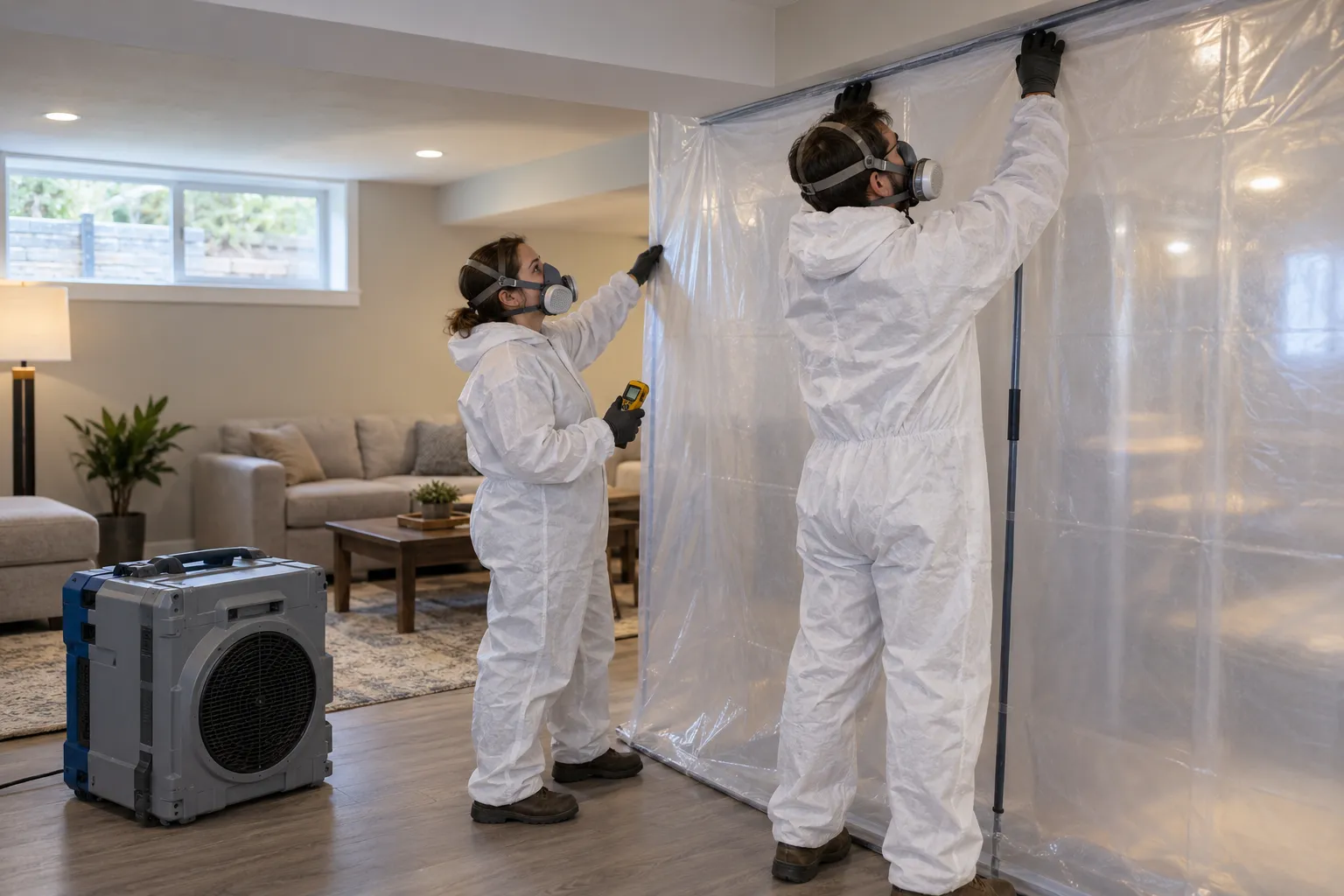
- Containment, which seals the work area from the rest of the home
- Air filtration with HEPA units, which trap very fine particles
- Removal of mold-damaged materials such as drywall, insulation or carpet
- Cleaning of wood and hard surfaces that can be saved
- Drying and a final check of the area
Some providers also arrange certified mold testing before or after the work. Ask who performs it and which lab analyzes the samples.
Why containment matters
Mold spreads by spores. Disturb a patch and millions can drift into the air. Containment uses plastic sheeting and sealed edges to hold them in place.
Providers often add negative air pressure. A fan pulls air out of the work zone through a filter, so air leaks in rather than out. This is equipment you cannot match with a box fan and tape. It is the biggest reason residential mold removal is not a weekend project once the growth is large.
Moisture first, mold second
Removing mold without fixing the water is a short-term fix. It returns within weeks.
Common sources in homes like yours include:
- Basement walls that take in water during fast spring melt
- Roof leaks after hail or heavy snow loads
- Stucco that traps water behind the surface
- Plumbing leaks inside walls
- Bathroom and kitchen fans that vent into the attic
A good provider finds the source or tells you which trade should fix it. Dry air outdoors does not mean a dry house. Sealed, newer frame homes can hold indoor humidity for a long time.
What you can safely do yourself
Some tasks are fine for a homeowner. Wiping a small patch of surface mold, under about ten square feet, from a hard, non-porous surface like tile is one of them. Use detergent and water, wear an N95 mask, gloves and eye protection, and keep the area ventilated.
You can also run a dehumidifier, fix a dripping fixture, move belongings out of the damp area, and bag soft items that are only lightly affected.
When you need a professional
Stop the DIY approach when any of these apply:
- The growth is larger than a small patch
- It is inside walls, under flooring or in the HVAC system
- It came from sewage or long-term flooding
- Someone in the home is ill or sensitive
- The smell returns after cleaning
Porous materials like drywall and insulation usually cannot be cleaned. They have to be cut out and replaced.
Working with your insurance
Some policies may cover sudden damage, such as a burst pipe. Slow leaks and neglected maintenance are often excluded. Check your policy and ask your insurer directly.
Providers can often help document damage for a claim. Give them your photos, and ask for the scope of work in writing before cleanup starts.
Choosing a provider
When providers respond, compare them on specifics rather than speed alone. Ask:
- Will you give a written scope and quote?
- What credentials and insurance do you hold, and can I see proof?
- How will you contain the area?
- Who handles testing, and is it independent of the cleanup?
- What happens if the moisture source is not fixed?
Quote in writing. A vague number with no scope is a warning sign.
After the work is done
The provider should confirm the area is dry and clean. Some arrange a clearance test afterward to compare air samples with the outdoors.
Then keep indoor humidity between 30 and 50 percent, clear gutters and downspouts before snowmelt, and check basement corners each season. Catching a small leak early is far cheaper than another cleanup.
What's Included
Moisture Source Check
The provider traces where the water comes from, so the mold does not simply come back.
Sealed Containment Setup
Plastic barriers and filtered air machines keep spores from moving into clean rooms.
Mold Removal
Affected materials are cut out or cleaned, depending on what can be saved.
Cleaning and Drying
Surfaces are cleaned and dried, and air is filtered before the area reopens.
Typical Remediation Costs
Prices vary a lot by size, material and access. These are typical U.S. ranges, not quotes. Moisture repair is often separate. Always ask for a written quote that lists exactly what is included.
| Item | Typical range | Notes |
|---|---|---|
| Small area, under 10 sq ft | $450 – $1,500 | Often one surface, easy access |
| Single room | $1,500 – $4,000 | Depends on drywall and flooring removed |
| Basement or crawl space | $2,500 – $8,000 | Larger area, higher moisture |
| Attic | $1,500 – $6,000 | Often tied to roof or venting problems |
| Containment and air filtration | $500 – $2,000 | Sometimes bundled into the job price |
| Moisture source repair | $300 – $5,000 | Often handled by a separate trade |
How It Works
Send Your Request
Use the form or Request a callback to check provider availability. Describe where the mold is and what you see.
We Route It
Your details go to an independent local provider in our network for review.
Provider Inspects and Quotes
The provider assesses the damage, explains the plan and gives you a written quote.
You Decide
Compare, ask questions, and hire only if you are comfortable with the scope.
Why Call Specialahead Mold Help
Clear Roles
We route requests. Independent providers inspect, remove and clean. You always know who does what.
Local Providers
Providers in our network work near you and know local basements, wood framing and stucco.
Written Quotes
Each provider sets its own price. Ask for a written scope before you agree to anything.
No Obligation
Sending a request does not commit you to hire any provider.
Other Services

Need mold remediation in Salt Lake City?
Describe your mold problem and request an estimate. Or use Request a callback to check provider availability. A local provider in our network follows up with you directly.
No obligationMold Remediation FAQ
- Can I remove mold myself?
- Small patches on hard surfaces, under about ten square feet, are often manageable with detergent, gloves and an N95 mask. Mold in walls, HVAC systems or large areas needs a professional with containment equipment.
- How much does mold remediation cost?
- In the U.S., small jobs often run a few hundred to $1,500, and a single room $1,500 to $4,000. Basements and widespread growth cost more. Ask each provider for a written quote that lists the scope.
- Will the mold come back after remediation?
- It can if the moisture problem is not fixed. Remediation removes the mold, but a leak, high humidity or poor ventilation will let it return. Ask the provider how they identified and addressed the source.
Request a callback
Describe your mold problem and request an estimate. Or use Request a callback to check provider availability. A local provider in our network follows up with you directly.
No obligation